Search This Blog

Saturday, August 4, 2012

Pacific Horticulture Magazine


The Oregon specialty nursery community was highlighted in the Summer 2012 issue of Pacific Horticulture Magazine.  Wild Ginger Farm, along with our friends at Dancing Oaks Nursery and Joy Creek Nursery, were featured in an article entitled “Nurturing Plants & Gardeners:  Three specialty nurseries in Oregon offer fine plants, knowledgeable help, and inspirational gardens”.    You can read the online version at http://www.pacifichorticulture.org/articles/nurturing-plants-and-gardeners/

Meanwhile, we are bracing for our first heatwave of the season.  Those of you who live in the Eastern half of the nation will not feel any sympathy for us since you have endured sweltering temperatures all summer.    In the Pacific Northwest, our temperatures have been so mild that some of us have wondered if we would miss summer entirely.   We now have our answer! 

Now, off to watering…  (Enjoy a few recent photos around the nursery.)

Tigridia pavonia - Yes, they are over the top but still fabulous

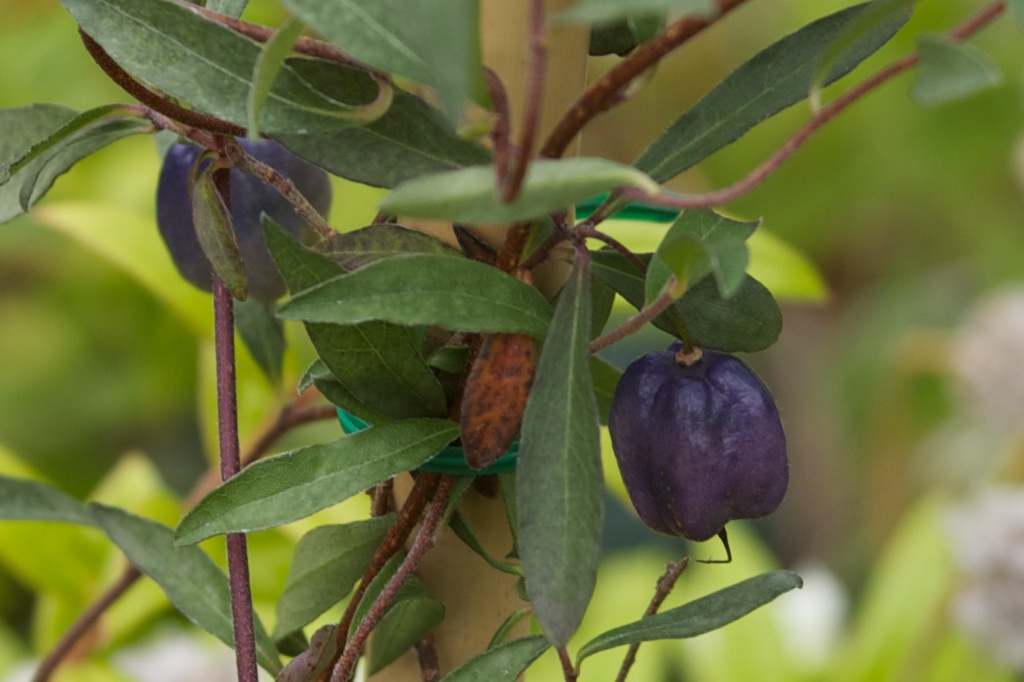
Billardiera longiflora, the fruit give this Chilean vine its common name of Blueberry Vine.

Clivia miniata can be grown outside in summer and is a great, easy care houseplant in winter

Thursday, July 5, 2012

Road Trip


A recent trip to the Siskiyou Mountains of Southern Oregon was a great reminder of the reasons we grow native plants and create naturalistic gardens in which to showcase them. Viewing plants in nature, whether on rocky slopes, in meadows, woodlands or in alpine settings, is the perfect inspiration for growing them at home.  The Siskiyous are a botanically rich and diverse region and I was able to see plants growing in a wide range of native habitats.


When traveling in the Siskiyous, you learn to expect the unexpected.  Our namesake plant, wild ginger, is generally a woodland plant.  Here, Asarum marmoratum also grows on open rocky talus slopes with its roots buried deep in the cool moist soils below.


Rock outcroppings become hanging gardens for Sedum spathulifolium and other native Sedum species.


Some attractive plants thrive along the roadways and we viewed many Penstemon species, masses of Iris innominata and small perennials like Phlox adsurgens.


Water is a limited resource in Western mountains and plants develop strategies for coping with dry summers.  Geophytes such as Calochortus, Triteleia and Lilium flower in moist early season soils and go completely dormant as soils dry.


Other plants such as Aquilegia formosa and Heuchera micrantha grow near permanently moist areas in and around seeps, springs and streams.


I was particularly excited to spot the illusive Lilium bolanderi during this trip.


One of the most unique habitats in this region is the serpentine bogs where the insectivorous Cobra Lily Darlingtonia californica grows in profusion along with other serpentine tolerant plants such as the Epipactus grandiflora and Lilium pardalinum ssp vollmeri.


Viewing these unique plants was one of the highlights of my trip and I am already making plans to build a new bog garden at the nursery!

Saturday, June 2, 2012

Around The Garden


Spring is such a delightful time of year, I thought I would share a few photos taken around our garden in recent days.


We grow a dwarf form of the non-climbing Clematis integrifolia.  This is an easy to grow and extremely cold hardy perennial with short wiry stems and pretty steel blue flowers.  It adapts well to a variety of garden conditions.


Alyssum stribrnyi grows happily in the west facing crevice in our tufa rock garden.  It is another cold hardy perennial and is also heat and drought tolerant.


The cushion pinks are tough and long-lived workhorses in the rock garden.  They form low evergreen cushions with flower displays in spring.  This Dianthus subacaulis has formed a cushion almost three feet across.


Cardiocrinum giganteum is called the giant lily and it is easy to see why.  After several years in the garden, this specimen has decided to flower and is now over nine feet tall and still growing.    I am having to trim up the weeping cherry tree to allow the lily to reach toward the sky!  We have a limited number of non-flowering bulbs available at the nursery.


Himalayan Blue Poppies, Meconopsis betonicifolia, bloom happily in our woodland garden.  Our cool spring weather has prolonged their flowering period.  For our mail order customers, we ship Blue Poppies only in early spring and again in the fall.  They are available at the nursery all year for locals. 


Wild Ginger Farm nursery is open Thursday through Sunday from 10 am to 4 pm.


Wednesday, May 9, 2012

Pacific Coast Iris


This is a great time to visit the nursery if you are interested in Pacific Coast Irises.  Most of the nursery plants are in flower and the irises in the gardens are also coming into bloom.


Pacific Coast Irises (PCI) are a group of 11 species of beardless irises that occur only in states along the West Coast of the U.S. from Southern Washington southward through Oregon and into Central California.  PCI species and naturally occurring hybrids typically have narrow petals or falls, some with intricate vein patterns, and a prominent patch to attract insects.  They occur in a wide range of colors including white, yellow, blue, and all shades of purple.  


Pacific Coast Irises are so closely related that they hybridize freely with one another to produce new and interesting results. This occurs in nature when they grow in close proximity to one another and it is often difficult to accurately identify plants found in the wild. 


Iris hybridizers have developed complex PCI hybrids and the plants sold in nurseries are often many generations removed from wild plants.  The result of these hybridizing efforts can be seen in an seemingly infinite array of colors, patterns, sizes and forms.  We grow our own PCI hybrids at Wild Ginger Farm and many of the plants we offer are our own hybrids. 


Pacific Coast Irises grow best in Western climates with winter rainfall and low summer rainfall and low humidity.   They are difficult to grow in areas east of the Rockies that have high summer humidity.   PCI are best grown in sun to part shade in well-drained soil with low summer water.  Their drought tolerance makes them welcome and colorful additions to drier areas of sunny and open woodland gardens.